
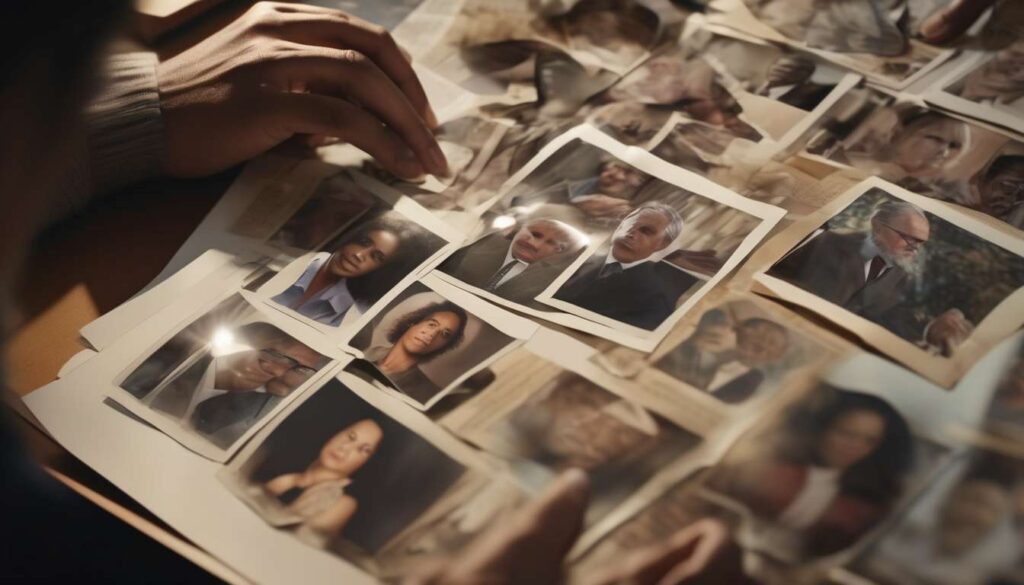
Bias in interpreting images of adults persists.
We often assume what we see is straightforward and self-explanatory. We believe a photograph of an adult subject conveys a fixed truth—about age, consent, context, or intent—when in fact those visual cues are ambiguous and shaped by production choices.
We accept captions and frames without interrogation.
We frequently accept captions, headlines, and social media frames without asking who created the image, why it was circulated, or what was omitted. We mistake visibility for clarity and familiarity for understanding.
Apply media literacy tools to recalibrate instincts.
- Check provenance: who made the image, when, and in what context?
- Examine framing: what is shown, what is cropped out, and how are visual elements arranged?
- Consider power dynamics: who benefits from the image’s circulation and whose perspectives are excluded?
Benefits of contextualizing adult imagery.
By unpacking provenance, framing, and power dynamics, we enrich conversations about representation, privacy, and ethics surrounding adult images.
Purpose of this article.
This article will guide readers through common pitfalls and offer practical strategies to read, question, and contextualize adult imagery more responsibly, so responses are informed rather than reactive.
Why Visual Assumptions Fail
We often assume a single image tells the whole story, but visual cues can mislead us through context loss, framing, and cultural bias.
We see a face or a moment and rush to conclusions, yet without clear image provenance we’re guessing at origins, edits, and intent.
We value caption authority when it guides interpretation, but we also know captions can be incomplete or biased; they shouldn’t replace verification.
We want to respect people in images, so privacy and consent matter — if we can’t confirm consent, we won’t amplify potentially harmful content.
Together, we can demand transparent sourcing and question who benefits from a given framing.
We should push platforms to label uncertainties rather than present speculation as fact.
We belong to a community that prefers accountability over sensationalism and will prioritize practices that protect dignity and truth.
By recognizing how assumptions form, we create room for more careful, inclusive coverage that resists snap judgments and centers consent and accurate context.
Tracing Image Provenance
To trace an item’s origins, we follow digital breadcrumbs — metadata, publication history, and reverse-search results — to verify where, when, and how a photo was made and shared.
We check image provenance by comparing file metadata, upload timestamps, and earlier publications to build a chain of custody.
We cross-reference captions and bylines to test caption authority, noting when labels change or sources are vague.
We consult original platforms and contact publishers when possible, because collaborative verification strengthens our community’s confidence.
We’re mindful of privacy and consent at every step. Provenance work can expose identities or sensitive contexts, so we weigh the public interest against potential harm. When consent is unclear, we flag uncertainty rather than assert misleading claims.
We share methods and findings transparently so others can reproduce our checks, creating a supportive network that values accuracy and care.
By tracing provenance together, we defend truthful reporting while protecting people affected by image circulation.
Reading Frames and Crops
Framing and cropping change what a photo communicates.
A tighter crop can erase surroundings that explain an encounter; a wide frame can reveal relationships and environment that shift interpretation.
Check image provenance.
Know whether a crop was made at the source or later, because provenance affects responsibility and trust.
Captions influence interpretation.
Captions can reinforce selective frames, so read them critically while staying connected to community standards.
Respect privacy and consent.
Cropping can expose or hide identifying details that affect someone’s dignity and safety — treat consent as central.
Adopt practical habits to reduce harm and bias:
- Compare the original and edited images.
- Question missing context and who might benefit from a particular frame.
- Consider the subject’s safety and dignity before sharing.
Aim for clearer, kinder choices.
By checking provenance, questioning captions, and prioritizing consent, we protect the people in the images we share.
Questioning Caption Authority
We shouldn’t take captions at face value; they often shape interpretation and can include omissions or spin.
Question caption authority by tracing image provenance and asking who decided what context mattered.
Demand labels that explain:
- Where an image came from (source, original uploader).
- Whether it’s been edited (cropped, retouched, AI-altered).
- Whether subjects gave privacy consent for publication.
When captions assert motives, locations, or identities without sourcing, call that out.
Ask for verification or a clear source when captions make factual claims about people’s motives, places, or identities.
We belong to a community that values accountability, so we check:
- Metadata (EXIF, timestamps, device data).
- Reverse-image searches (to find prior uses or originals).
- Publisher notes (editorial disclaimers, licensing).
Insist that captions include transparency about consent—especially for vulnerable subjects.
When adults appear in sensitive situations, captions should state whether consent for publication was obtained and by whom.
Treat captions as starting points rather than final judgments.
By questioning caption authority in a constructive way, we protect individuals and strengthen trust in media.
Questioning captions isn’t adversarial; it’s collaborative.
We improve accuracy and respect by holding captions to clear, shared standards.
Power and Representation
Power shapes who gets seen, how adults are framed, and which stories about them get amplified or erased.
We notice patterns: certain faces recur, certain voices are centered, and others are sidelined.
To change that, we examine image provenance so we can trace why an image entered the public sphere and who benefited from its circulation.
We challenge caption authority by asking whose perspective captions reflect and whether they simplify complex lives into stereotypes.
We insist privacy and consent inform reuse and context without turning the issue into a separate legal debate.
Together we build practices that:
- Elevate underrepresented adults.
- Highlight intersectional contexts.
- Push outlets to explain sourcing and editorial decisions.
When we demand transparent provenance, accountable captioning, and respectful handling of consent, we create media spaces where people feel seen more fully.
That shared insistence on fairness and clarity helps everyone belong to a more truthful public conversation.
Privacy and Consent Issues
We’ll prioritize adults’ rights to control how their photos and stories are collected, shared, and repurposed across media platforms.
We’ll insist that image provenance is documented so communities can see where images came from and whether consent was obtained.
We’ll respect caption authority by ensuring people depicted or their representatives have a say in descriptive text that frames identity, context, and intent.
We’ll embed clear privacy consent practices into editorial workflows so members feel safe contributing or being featured.
We’ll avoid resharing images without documented permission, and we’ll flag content when provenance is unclear.
We’ll create spaces where those affected can request corrections, removals, or contextual updates, reinforcing belonging and mutual respect.
We’ll train teams to treat consent as ongoing, not a one-off checkbox, and to honor requests across platforms.
By centering image provenance, caption authority, and robust privacy consent, we’ll strengthen trust between media producers and the communities they serve, making coverage more ethical and inclusive.
Tools for Source Verification
We use a mix of digital tools to verify sources and reduce misinformation risks.
Reverse image search, metadata analyzers, geolocation mapping, and authenticated archives are combined to confirm origins and context rather than relying on a single method.
We rely on image provenance to trace origin and alteration history.
- Provenance helps identify who first posted a visual, how it has been reshared, and what edits or manipulations occurred.
- That history supports confidence and accountability across the group.
We check caption authority and cross-reference labels against original evidence.
- Verify that captions match the original post and posting account.
- Cross-check timestamps and compare with known repositories or corroborating posts.
- Flag inconsistencies for further investigation.
We employ metadata analyzers to reveal editing traces and device details.
- Extractable EXIF and file-structure data can indicate editing software, creation dates, and device models.
- Metadata findings are considered alongside other evidence to avoid overreliance on any one signal.
We use geolocation mapping to tie images to place when appropriate.
- Visual landmarks, shadows, and map-matching techniques help confirm or refute claimed locations.
- Geolocation is only used when it’s relevant and can be done responsibly.
We corroborate claims with authenticated archives and trusted outlets.
- Established archives and reputable news or institutional sources provide independent verification without guesswork.
- When archives disagree, we document the differences and pursue additional evidence.
We keep privacy and consent in mind throughout verification.
- Verification steps are designed to respect personal rights and community standards.
- Sensitive content is handled with extra caution; avoid exposing private details unnecessarily.
By combining these tools and practices, we create shared, responsible verification processes.
- The approach invites participation, safeguards dignity, and strengthens our collective ability to report accurately.
- These techniques help us belong to a network of information stewards who prioritize accuracy and accountability.
Ethical Reporting Practices
We commit to reporting adult images with care, balancing the public’s right to know against subjects’ dignity, safety, and legal protections.
We uphold image provenance as a nonnegotiable check.
- Tracing an image’s origin and any manipulation is required before publication.
- Provenance informs whether an image should run and what context must accompany it.
We verify caption authority so context isn’t assigned casually.
- A caption frames interpretation and must reflect documented facts, not assumptions.
- Captions require confirmation from reliable sources or documented evidence.
We insist on privacy consent whenever feasible.
- Recognize that consent can be withdrawn or constrained by circumstance.
- We will not exploit vulnerable people for clicks; we weigh newsworthiness against foreseeable harm and err on the side of restraint.
When publishing, we include clear sourcing notes and explain edits.
- Transparent sourcing and edit notes foster trust and shared responsibility with readers.
We welcome feedback and corrections, treating our audience as collaborators in ethical coverage.
By centering provenance, caption authority, and privacy consent, we protect individual dignity while keeping public discourse informed and inclusive.
How can ordinary people improve their own visual literacy skills without taking formal courses?
To improve our visual literacy without formal courses, we can practice critiquing images together.
Ask who made the image, why it was made, and what’s left out.
Compare sources and spot editing or framing tricks.
Look for signs of manipulation (cropping, color grading, selective focus) and consider how framing changes meaning.
Read captions closely.
Check for loaded language, missing context, or facts that don’t match the image.
Follow diverse creators and discuss findings in safe spaces.
Hearing multiple perspectives helps reveal assumptions and blind spots.
Use simple tools to check images.
1. Reverse image search to find origins and versions.
2. Metadata viewers to check dates and device info.
3. Basic editing apps to experiment and see how changes alter meaning.
Celebrate small gains and support each other’s learning.
Keep the process low-pressure and acknowledge improvements.
Keep questioning visuals we encounter daily.
Make a habit of pausing, asking the key questions, and sharing insights with others.
What are common legal risks for newsrooms when publishing images sourced from social media?
Concern: We worry that publishing social media images can expose us to copyright, privacy, and defamation claims, and may breach platform terms.
Mitigation steps:
-
Verify ownership and permissions.
- Confirm who owns the image and any underlying rights.
- Obtain clear written permissions or licenses before publishing.
- When stakes are high, use trusted sources or purchase rights.
-
Protect privacy and sensitive subjects.
- Blur or withhold sensitive content.
- Avoid identifying victims or minors.
-
Fact-check captions and context.
- Verify facts to reduce risk of defamation or misinformation.
-
Keep records and seek legal review.
- Maintain records of permissions and legal review notes.
How do algorithms and platform design influence which images become viral or widely trusted?
We see algorithms and platform design shaping what goes viral and what people trust.
Recommendation systems prioritize engagement, so sensational or emotional images get amplified.
We notice network effects, influencer boosts, and algorithmic feedback loops that reward repetition.
We understand platform affordances—likes, shares, verification badges—signal trust.
We act by cross-checking sources, diversifying feeds, and promoting media literacy so our communities feel included and resilient.
Conclusion
You’ll engage images differently if you bring media literacy to your reporting: you won’t assume what a picture shows, you’ll trace where it came from, and you’ll read frames and crops critically.
You won’t assume what a picture shows.
You will trace where an image came from.
You will read framing and cropping critically.
You will question captions and consider power in representation.
You will weigh privacy and consent.
You will use verification tools and follow ethical practices.
The result: your coverage adds context rather than misleads, which protects subjects and strengthens public trust in your work.